aiobservabilitydeveloper-tools
AI agents removed the friction from writing telemetry
I used to avoid adding telemetry because it felt like tedious busywork. Now with Claude handling the OpenTelemetry boilerplate, I'm instrumenting everything.
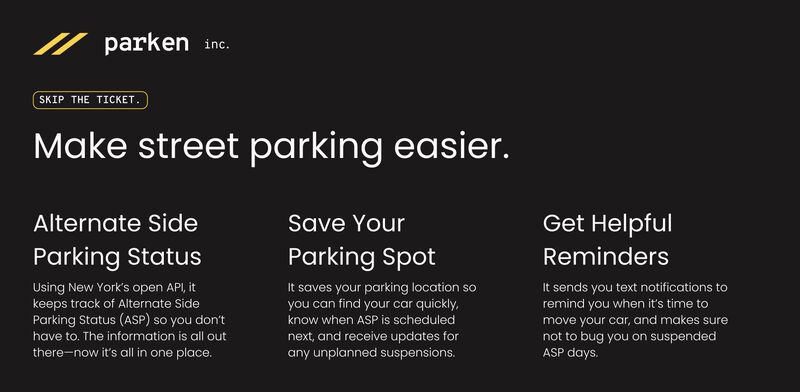
Laura Saladin and I are building Parken, an app to help me remember to move my car for Alternate Side Parking in New York City.
I'm heavily using Claude to build out large swaths of functionality as quickly as possible. But I wouldn't call it "vibe coding." I'm not trying to one-shot an entire app. I understand how the different pieces of the application fit together. I defined the architecture and chose the tools.
I work with Claude Code in plan mode to define the feature I want to build. I work through multiple iterations of the plan until I'm satisfied that the approach won't totally fall apart.
This is the step that matters most. If the plan is wrong, everything downstream is wrong too. Plan mode forces me to think through the approach before any code gets written, and Claude helps me pressure-test my ideas.
I use the Linear MCP server to generate Linear tickets based on the plan. If it's a feature that involves UI, I use the Figma MCP server to pull in design context.
This turns a high-level plan into discrete, well-scoped units of work. Each ticket has enough context that I can pick it up and pair on it without re-loading the full plan into my head.
I pair with Claude Code on those individual Linear tickets. I let Claude spin on the task, then use the GitHub CLI to push the changes to a branch.
As someone who spent a lot of their career specializing in frontend, I'm able to build out more full-stack applications quickly with the help of Claude Code. My frontend expertise means I can evaluate what Claude produces and course-correct quickly, while the AI helps me move faster on backend and infrastructure work.
I use the /review skill to evaluate the changes. Then, I review them myself before merging.
I don't skip this step. The review is where I catch things that slipped through –– edge cases, inconsistencies with the rest of the codebase, or approaches that technically work but don't fit the architecture I've defined.
I still think that the output of AI + human is far superior to either solo human, or solo AI. The key is staying intentional about the architecture and the tools, and using AI to amplify your expertise rather than replace your judgment.
I used to avoid adding telemetry because it felt like tedious busywork. Now with Claude handling the OpenTelemetry boilerplate, I'm instrumenting everything.
AI agents work better when given appropriate context and guardrails.
I've been using Claude Code to offload tedious parts of platform engineering: dependency reviews, generating test PRs, dependency migrations, and project cleanup.